
No products in the cart.
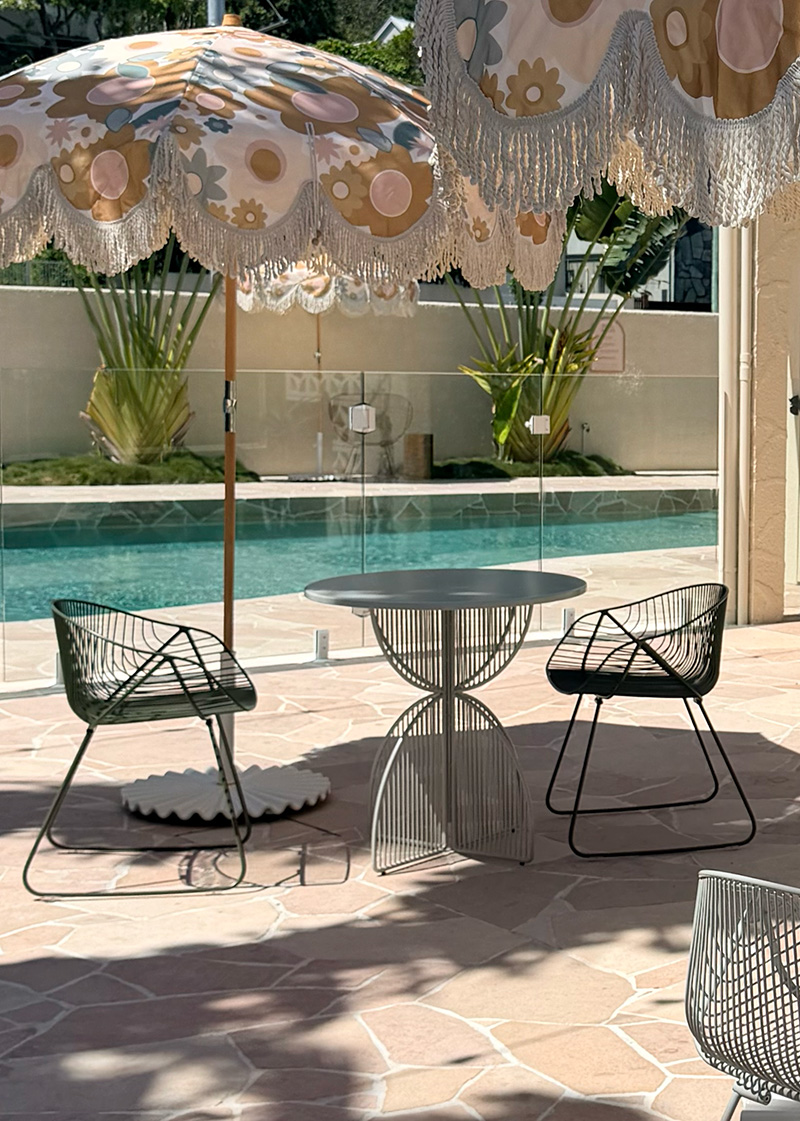
A few things worth thinking through before you buy.
Material first.
Mild steel can be fine for well sheltered spots, under a verandah or against a wall that takes the worst of the wind. But not if you live in humid conditions. Also remember, that like a white T shirt, if choosing white - it will show dirt the most & any discoloration through scratches or in welds. If your outdoor space is exposed, or you're anywhere near the coast, stainless steel is worth the extra cost. It's built specifically to resist salt spray and humidity, and it will outlast a mild steel chair left in the same conditions. Both will last longer with some love & care.
Comfort without relying on cushions.
A well designed wire chair doesn't need padding to be comfortable. The spacing between the wires is designed specifically for comfort. This means less to store, clean or replace when a cushion wears out.
Seat height matters more than people think.
Most dining tables sit at a standard height, so a dining chair needs a seat around 45cm to feel right alongside it. A chair that's slightly too low or too high changes how comfortable a long dinner actually is.
Weight, in both directions.
Outdoor dining chairs get moved often, so something light enough to carry with one hand matters. At the same time, a chair that's too light can feel unstable in wind. Solid steel wire strikes that balance better than tubular frames, which tend to be hollow and lighter.
What happens in ten years.
This is the one most people skip. A steel chair can be repaired if a weld fails, and repowdercoated in a new colour if the old one's had its time, or if you simply want a change. That's a different proposition to furniture that gets replaced the moment it looks tired.
If you're furnishing a deck or courtyard and want to see how different chairs compare side by side, our Portobello Chair page has a full FAQ covering dimensions, assembly and coastal suitability.

